
Ready to Roll? Start with Your Labeling Line
By Al the Label Guy
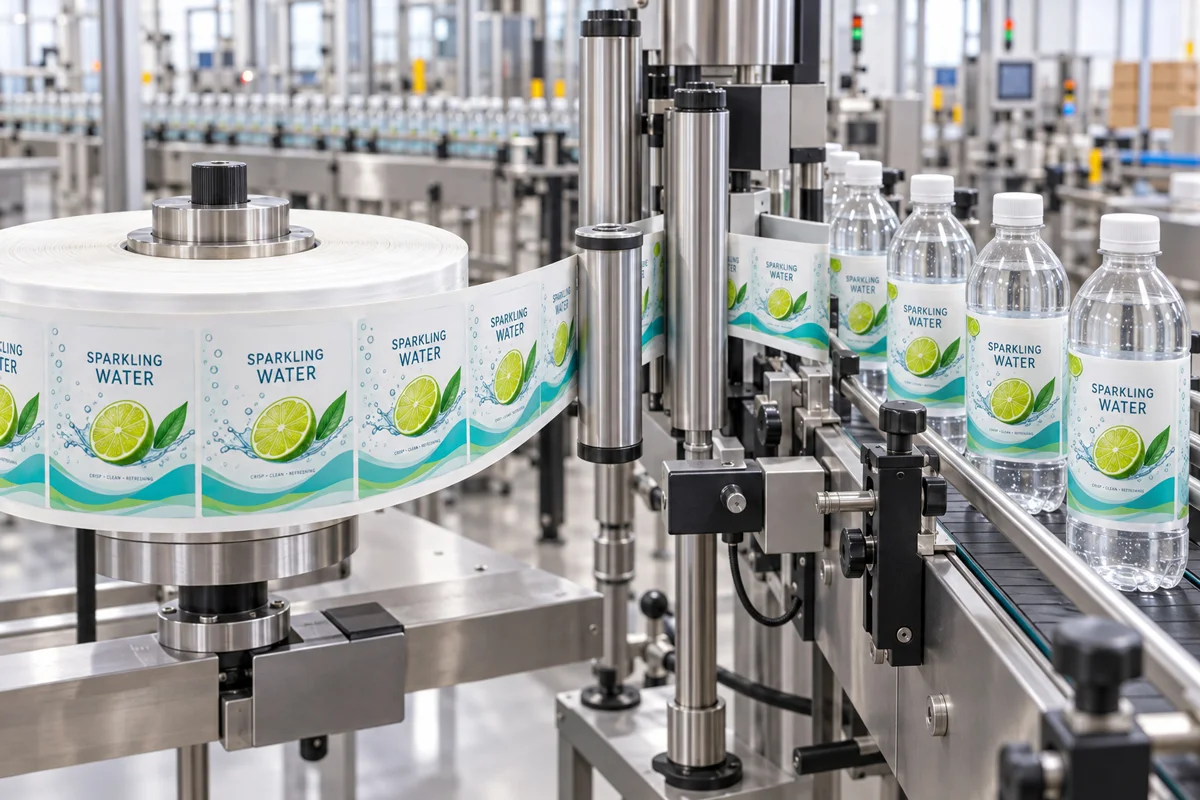
Bottles and other cylindrical containers can move through a packaging line pretty quickly. Your labels have to be ready to keep up.
That’s where Roll Fed labels come in. Supplied on a continuous roll, they’re designed to work with compatible automated labeling equipment for efficient, high-volume production.
But “Roll Fed” isn’t a one-size-fits-all label specification. The equipment applying the label is only the beginning. The product, container, material, environment, and what happens after the product leaves the production line all help determine what that Roll Fed label needs to do.
What Are Roll Fed Labels?
Roll Fed labels are supplied on a continuous roll rather than as individual pieces. Compatible application equipment feeds the label material through the machine, cuts each (if dictated by your equipment) label to size, and applies it to the container.
You’ll often see Roll Fed labels on beverages and other products packaged in cylindrical containers, where automated equipment needs to label large quantities efficiently.
That’s why the first question isn’t, “What kind of label do you want?”
It’s, “What equipment is applying it?”
Knowing the application equipment helps establish important label specifications, including dimensions, roll configuration, and material requirements.
The Product Matters, Too
Once you understand the labeling equipment, it’s time to look at the product itself.
A beverage that’s filled warm and later refrigerated puts different demands on its label than a product that stays at room temperature. Condensation, refrigeration, storage, shipping, and everyday handling can all affect label performance.
Ask practical questions such as: What temperature is the product when it’s filled? Will the container develop condensation? Will it sit in a refrigerator or cooler? How will cases be stored and transported?
The answers help determine the materials and other specifications that make sense for the application.
What About the 24-Hour Ice Bath Test?
For beverages and other products that may spend time packed in ice, there’s a pretty straightforward way to see how a label holds up: put it through an ice bath test.
A 24-hour ice bath test recreates the wet, cold conditions a labeled container may experience in the real world. It’s a practical way to evaluate how the label performs when exposed to extended moisture and chilling rather than assuming it’ll be fine once it leaves the production line.
Because looking good when the label is dry is only part of the job. It needs to perform where the customer will actually use the product.
Choosing the Right Roll Fed Label
Roll Fed labels can be produced using different materials and printing methods, including flexographic and digital printing. The best combination depends on the application, production requirements, artwork, quantities, and conditions the finished product will face.
This is where label expertise matters.
Gamse can help customers work through the details of their Roll Fed application, from equipment requirements and container specifications to materials and real-world performance. With flexographic and digital printing capabilities, we can recommend a production approach based on what the job actually needs.
After more than a century of printing labels, we’ve learned that getting the details right upfront can save a lot of headaches once the line starts moving.
Tell us about your label needs, your product, and your labeling equipment. We’ll help you build a Roll Fed label that’s engineered for your labeling line.